Pediatric EHR software has to cope with something adult practices rarely face: a patient who changes size, needs and legal status every few months. A general records system treats a 70 kg adult and a 7 kg infant as the same kind of file. That’s where the trouble starts.
Picture a Monday morning at a busy paediatric rooms in Gaborone. Fourteen children are booked before noon, three have arrived with a different parent from the one on file, and one baby is due for a vaccine that nobody can find the last date for. The doctor has about ten minutes per child. Every minute spent hunting for paper is a minute not spent looking at the child.
Good child health records answer three questions fast: how is this child growing, what have they been given and what is due, and who is allowed to make decisions about them. The rest of this article walks through each, then looks at how practice software can carry the load. Standards matter too. Coding diagnoses consistently, ideally in line with the World Health Organization’s ICD classification, keeps your records comparable and your claims cleaner.
Paediatric Growth Chart Tracking That Catches Problems Early
Growth is the closest thing paediatrics has to a vital sign. A single weight means little. Three weights plotted over six months tell you whether a toddler is thriving, faltering or quietly slipping across centile lines.
Your system should record weight, length or height, and head circumference at every relevant visit, then plot them against the right reference for age and sex. Paper charts tucked into the back of a folder get missed. When the plot appears automatically as you type the measurement, a downward drift becomes obvious to you and to the parent sitting opposite.
Corrected age for premature babies is a common trap. A baby born at 32 weeks should be judged against an adjusted age for the first couple of years, and a system that only knows the birth date will make a healthy child look behind. Check that whatever you use lets you note gestational age and handles this properly.
Weight is also the number that drives safety. Weight-based dosing records need the most recent measured weight sitting next to the prescription, with the date it was taken. A weight from four months ago is not a weight for a baby who has doubled their intake since. Many practices find the safest habit is to weigh at every sick visit, however briefly, and let the record carry that figure forward into the prescribing screen.
Botswana’s disease burden adds another layer. The telemedicine research behind recommendations for a Botswana telemedicine strategy lists HIV and tuberculosis among the priority health issues. For paediatric practices, that means growth records often sit alongside exposure history, treatment notes and follow-up reminders. A child who is faltering on the chart and has a household TB contact needs those two facts visible together, not in separate files.
Immunisation Schedule Management Software That Doesn’t Rely on Memory
The national schedule is the backbone of preventive care, and the Ministry of Health and Wellness is the authority on what it contains. You can find current national guidance through the Ministry of Health and Wellness, Botswana. Your software should reflect that schedule, not a generic one imported from somewhere else.
What does good immunisation schedule management software actually do? It records each vaccine with the date, the batch number, the site and who gave it. It then works out what’s due next and flags what’s overdue, so the nurse doesn’t have to count weeks on her fingers. Catch-up schedules for a child who arrives late or from another country are where manual tracking falls apart fastest.
Stock matters as well. If you hold vaccines on site, the cold chain and expiry dates are part of the job, and the US Centers for Disease Control and Prevention’s guidance on vaccine inventory management is a useful benchmark for how careful stock records should be. Tying a batch number in the child’s file back to your stock log means that, if a batch ever has to be traced, you can find every child who received it in minutes rather than days.
Reminders are the quiet win. A recall list generated each week, showing children due in the next fortnight, turns a missed vaccination into a phone call or message. Parents are busy. They’ll usually come when asked.
Guardian and Family Record Management for Real-World Households
Adult systems assume the patient is the person who pays and consents. Paediatrics breaks that assumption daily. The child is the patient, but a mother, an aunt, a grandfather or a school driver might be the one in the room.
Family record management starts with linking each child to their guardians and recording the relationship clearly. Who holds parental responsibility? Who may consent to treatment? Who is the account holder for billing, and who is merely the person who brings the child on Thursdays? Writing this down once, properly, saves awkward conversations at the front desk.
Siblings should be linked too. When a child is diagnosed with something contagious, or when a family needs a combined appointment, seeing the household in one view is practical. It also makes paediatric appointment booking smoother, since you can place three siblings back to back instead of scattering them across a week. The MGMA’s guidance on patient scheduling and access makes the broader point that scheduling design directly shapes how easily patients reach care.
Privacy deserves a firm mention. Children’s information is sensitive, and a guardian’s details sit alongside it. Botswana’s data protection rules have been changing, and this overview of Botswana’s new Data Protection Act is a good starting point for understanding what that means for how you store and share records. Limit access by role, keep an audit trail, and be careful about who receives a copy of a child’s file. Good habits here are also part of sound record keeping, as the Medical Protection Society’s guide to record keeping explains.
One more point on adolescents. As children grow, their confidentiality needs change, and your system should let you handle that sensibly rather than exposing everything to a parent by default.
Where GoodX Fits Into a Paediatric Practice
A paediatric practice doesn’t need a separate tool for every problem. It needs one system where clinical notes, bookings and billing talk to each other. That’s the role GoodX practice management software plays for many practices in Botswana.
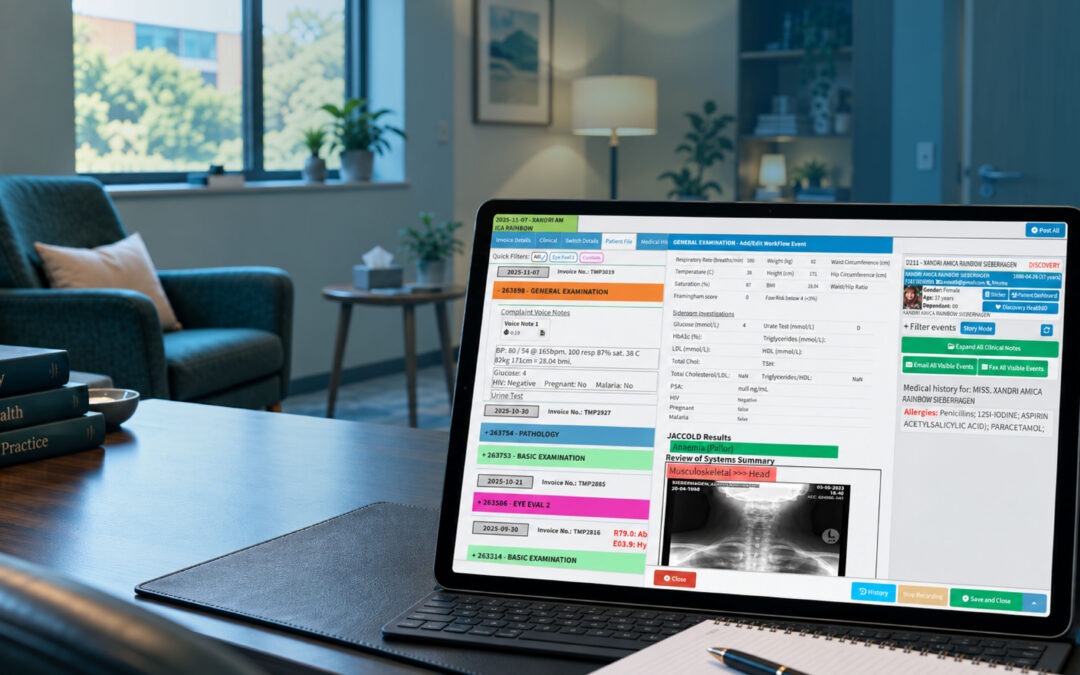
On the clinical side, GoodX supports structured patient records so measurements, diagnoses, prescriptions and notes live in one place and can be pulled up quickly during a consultation. [INTERNAL LINK: clinical records for medical practices -> GoodX clinical records page] describes how that works in more detail. Keeping weights, vaccine history and visit notes together means the doctor isn’t flipping between folders while a toddler is trying to climb off the couch.
On the front desk, bookings and reminders cut down on no-shows and double-booked slots. [INTERNAL LINK: online appointment booking -> GoodX appointment booking page] covers how practices manage their diaries. Family-friendly scheduling, such as booking siblings together, is simpler when the diary and the patient record are connected.
Then there’s the money side. Billing and claims are easier to get right when the diagnosis and the visit details are captured at the point of care rather than retyped later. [INTERNAL LINK: medical billing and claims -> GoodX billing page] explains how GoodX helps practices keep invoicing tidy. Reporting rounds it off: you can see how many children are overdue for vaccines, how busy each day is and where the diary has gaps. Platforms like this also support the digital approach that the World Health Organization’s digital health work encourages across health systems.
Frequently Asked Questions
What should a paediatric EHR record that a general EHR doesn’t?
A paediatric EHR should record growth measurements plotted on age-appropriate charts, current weight for dosing, immunisation history with batch details, and guardian relationships. It also needs gestational age for premature babies and developmental notes. General systems often treat these as optional extras rather than core fields.
How often should a child’s weight be recorded?
Record weight at every visit where a medicine might be prescribed, and at all routine reviews. Children’s weights change quickly, so an old figure can lead to the wrong dose. The record should show the date of each measurement so the prescriber knows how current it is.
Can software help with missed vaccinations?
Yes. Software can calculate when each vaccine is due, flag overdue children and produce recall lists for staff to follow up. It can’t replace the clinical decision, but it stops children slipping through because someone forgot to check a paper card.
Who can consent to treatment for a child in the system?
That depends on the legal relationship and the situation, not on whoever brings the child in. Your records should note who holds parental responsibility and who has authority to consent. If you’re unsure about a specific case, check with the Ministry of Health and Wellness or your professional body.
Is a child’s health record covered by data protection rules?
Yes. Children’s records are personal and sensitive information, and Botswana’s data protection law applies to how you collect, store and share them. Use role-based access, keep audit trails and share information only with people who are entitled to it.
Book your free GoodX demo
If you’d like to see how GoodX could fit the way your paediatric practice works, book a free demo and ask to see growth, vaccine and family records in action. Bring your trickiest Monday morning scenario along. Start at goodx.co.bw.
Disclaimer: This article is provided for general informational and educational purposes only. While GoodX Software takes reasonable care to ensure that the information is accurate and current at the time of publication, laws, regulations, industry standards, healthcare policies and technology may change. The content should not be regarded as medical, legal, financial or other professional advice. Readers should verify information relevant to their circumstances and consult an appropriately qualified professional where necessary. GoodX Software accepts no responsibility for decisions made or actions taken solely on the basis of this content.