Picture a Monday morning at a small therapy practice in Gaborone. The phone’s ringing, two clients are waiting, the 9am slot has been booked twice, and last week’s session notes are still sitting in a notebook on someone’s desk. Good practice management software therapy practices can rely on fixes that morning before it starts.
It isn’t about replacing your clinical judgement. It’s about taking the admin that eats your evenings and making it predictable. Below, we look at scheduling, notes and billing, then at where GoodX fits.
Therapy Appointment Scheduling Software
Therapy runs on rhythm. Clients come weekly or fortnightly, at the same time, with the same person, and a gap in that rhythm often shows up in their progress. Paper diaries and shared spreadsheets can hold that together for a while, but they crack once you have more than one therapist or a part-time receptionist.
Good therapy appointment scheduling software gives everyone one live view of the diary. Recurring bookings are created once rather than retyped every week. When a client moves a session, the old slot opens up immediately and the receptionist can see it, so it isn’t discovered at 4pm when it’s too late to fill.
No-shows deserve special attention. The American Medical Association’s practice management resources treat missed appointments as a core workflow and revenue problem, and that matches what we see in practice. A client who forgets a 2pm session costs you the hour, the preparation and the income. Automated appointment reminders by SMS or email, sent a day or two ahead with a clear way to confirm or reschedule, are the cheapest fix available.
A few habits make scheduling tools work harder for you. Block out time for notes and admin, as therapists who don’t end up writing them at home. Set a clear cancellation policy and have the system show it at booking. Keep a short waiting list so a cancelled slot gets filled within the hour.
One more point about the diary: it’s also a record. When a dispute arises about whether a session took place, a timestamped booking history settles it in seconds. A scribbled page doesn’t.
Therapy Session Notes Software
Most therapists didn’t train to type. Notes are the task that gets pushed to Friday afternoon, then to the weekend, and by then you’re reconstructing a session from memory. That’s when detail gets lost and risk creeps in.
The American Psychological Association’s record keeping guidelines cover what a sound clinical record contains, how long to keep it, and how to dispose of it securely. In plain terms: record the reason for referral, the assessment, the plan, what happened in each session, and any consent given. Keep it accurate, dated and attributable to you. Keep it for the period your professional body and the law require.
Therapy session notes software helps you meet that standard without turning every session into paperwork. Templates give you a consistent structure, and you can adapt them to your modality, whether that’s counselling, occupational therapy, physiotherapy or speech therapy. Notes sit against the client’s file, next to their history and appointments, so you’re not hunting through folders before a session.
Confidentiality is where paper fails most obviously. A filing cabinet can be opened by anyone with a key, and a notebook can be left in a car. Secure client records, with individual logins, role-based access and an audit trail of who opened what, protect your clients and protect you. Therapy notes are among the most sensitive information a person can share, so treat them accordingly.
Botswana’s data protection rules are worth knowing too. The Botswana Data Protection Act places obligations on anyone handling personal information, and health data is treated with particular care. Ask your software provider plainly how data is stored, who can see it and how it’s backed up. If the answer is vague, that’s your answer.
Finally, think about client access. Clients may ask to see their records, and you should have a clear process for handling that request. It’s far easier when everything is in one structured place.
Therapy Billing and Payments Software
Billing is where good practices quietly lose money. Not through dramatic failures, but through small leaks: a session never invoiced, a part-payment not recorded, a statement sent three months late.
Therapy billing and payments software closes those leaks by linking billing to the diary. When a session is marked as attended, the invoice follows. You see who owes what, for how long, and you can send statements without rebuilding a spreadsheet. Clients who pay privately can settle by card or transfer, and the payment is matched to the invoice rather than to your memory.
Then there’s the medical aid side. Medical aid claims for therapists are a different animal from private billing. Each claim needs the correct practice number, tariff or billing code, diagnosis information where required, and member details exactly as the scheme holds them. One transposed digit in a membership number and the claim bounces. Then somebody has to find it, fix it and resubmit.
Picture a rejected claim on the 25th of the month. The therapist assumed it was paid, the receptionist didn’t know it was rejected, and the client is now being asked to cover it. Nobody did anything unreasonable, yet the practice is out of pocket and the client is annoyed.
The AMA’s material on revenue cycle fundamentals makes a simple point that holds up everywhere: track a claim from creation to payment, and don’t let it vanish in between. Software that flags errors before submission, and shows you which claims are outstanding or rejected, turns that chase from a monthly panic into a routine weekly check.
A short list of numbers worth watching each month:
- Total invoiced against total received
- Claims rejected, and the most common reason
- Debtors older than 60 days
Keep the list that short. If you only look at those three, you’ll still catch most problems early.
Where GoodX Fits In
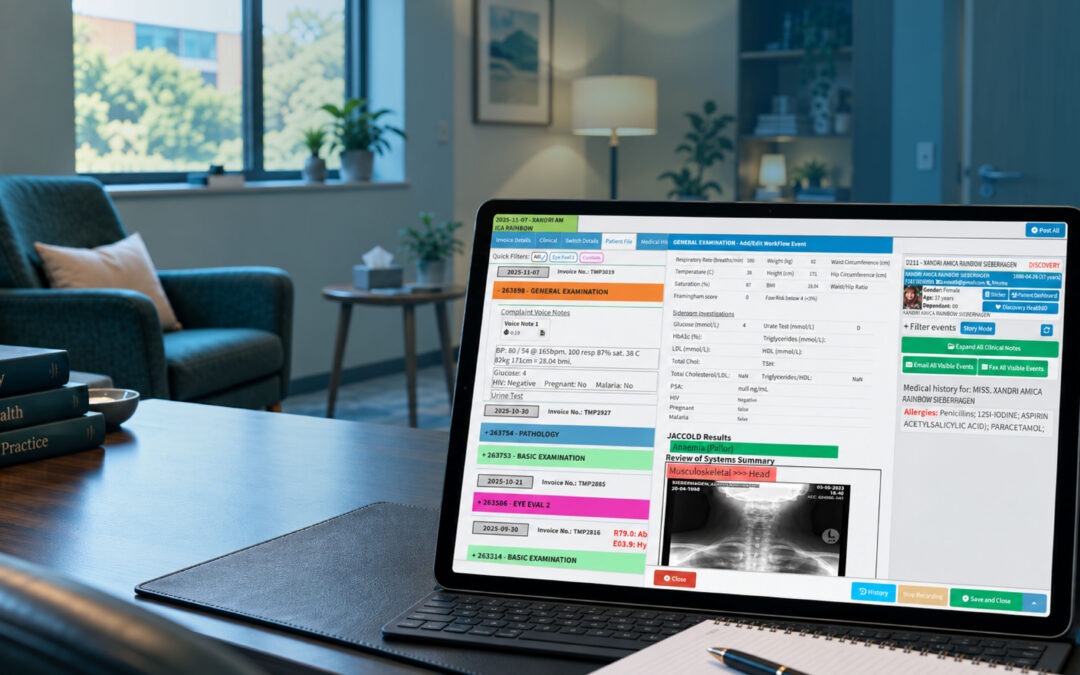
GoodX is practice management software built with medical and allied health practices in mind, and it’s designed to bring the three areas above into one system. That matters because the problems we’ve described don’t live separately. A missed reminder becomes a no-show, a no-show becomes a billing gap, and a billing gap becomes a conversation nobody wants to have with a client.
On the diary side, GoodX supports online and front-desk bookings, recurring appointments and automated appointment reminders, so your reception team spends less time on the phone and more time with people in the room. On the clinical side, you can keep structured notes and secure client records in the same place as the appointment history, with access controlled by user.
For money, GoodX supports private invoicing and medical aid claims for therapists, linked to the sessions you’ve actually delivered. Reporting then shows you what’s been billed, what’s been paid and what’s outstanding, so you can make decisions from the numbers rather than from a hunch. If you’re weighing up how this might work for your own caseload, [INTERNAL LINK: see how GoodX supports allied health practices -> GoodX allied health and therapy solutions page] is a sensible starting point.
Switching systems is a real project, so ask practical questions. How will existing client data be moved? What training is provided? Who do you call when something goes wrong on a busy Tuesday? You can also read more about [INTERNAL LINK: how GoodX handles claims and billing -> GoodX billing and medical aid claims page] before you speak to anyone.
For the wider context on why digital tools matter in care delivery, the World Health Organization’s digital health resources are a useful, neutral read. And if you’re building your case for the practice owner or your business partner, our guide on [INTERNAL LINK: choosing the right practice management system -> GoodX practice management guide] covers the questions to ask.
Frequently Asked Questions
What is practice management software for therapy practices?
It’s a system that handles the business side of a therapy practice in one place: appointments, client records, session notes, invoicing and claims. Instead of juggling a paper diary, a spreadsheet and a notebook, your team works from a single, shared source of information.
Can software really reduce no-shows?
Yes, it can reduce them, though not eliminate them. Automated reminders sent by SMS or email ahead of the session prompt clients to confirm or reschedule. Combined with a clear cancellation policy and a waiting list, you’ll recover many slots that would otherwise sit empty.
Is it safe to store therapy notes electronically?
It can be safer than paper, provided the system is set up properly. Look for individual logins, access controls, backups and an audit trail. Also confirm how your provider stores data, and make sure your practice follows Botswana’s data protection requirements.
Does it help with medical aid claims?
Yes. Good software links claims to the sessions you’ve delivered, checks for missing or incorrect details before submission, and shows which claims are paid, pending or rejected. That visibility lets you correct errors and resubmit quickly instead of discovering problems weeks later.
How long should therapy records be kept?
It depends on your profession and the law. Professional bodies and regulators set retention periods, so check with yours. Whatever the period, records should be kept securely for that time and disposed of safely afterwards, as the APA’s record keeping guidance also stresses.
Book your free GoodX demo
If your diary, notes and billing still live in three different places, a short demo will show you what one connected system looks like. Book your free GoodX demo at goodx.co.bw and see how it could fit the way your practice already works.
Disclaimer: This article is provided for general informational and educational purposes only. While GoodX Software takes reasonable care to ensure that the information is accurate and current at the time of publication, laws, regulations, industry standards, healthcare policies and technology may change. The content should not be regarded as medical, legal, financial or other professional advice. Readers should verify information relevant to their circumstances and consult an appropriately qualified professional where necessary. GoodX Software accepts no responsibility for decisions made or actions taken solely on the basis of this content.